




-
 adminmax
- January 13, 2026
Boost Your SEO with NotionEmbed Tips
In the digital age, SEO is crucial for online success. It determines your website’s visibility on search engines.
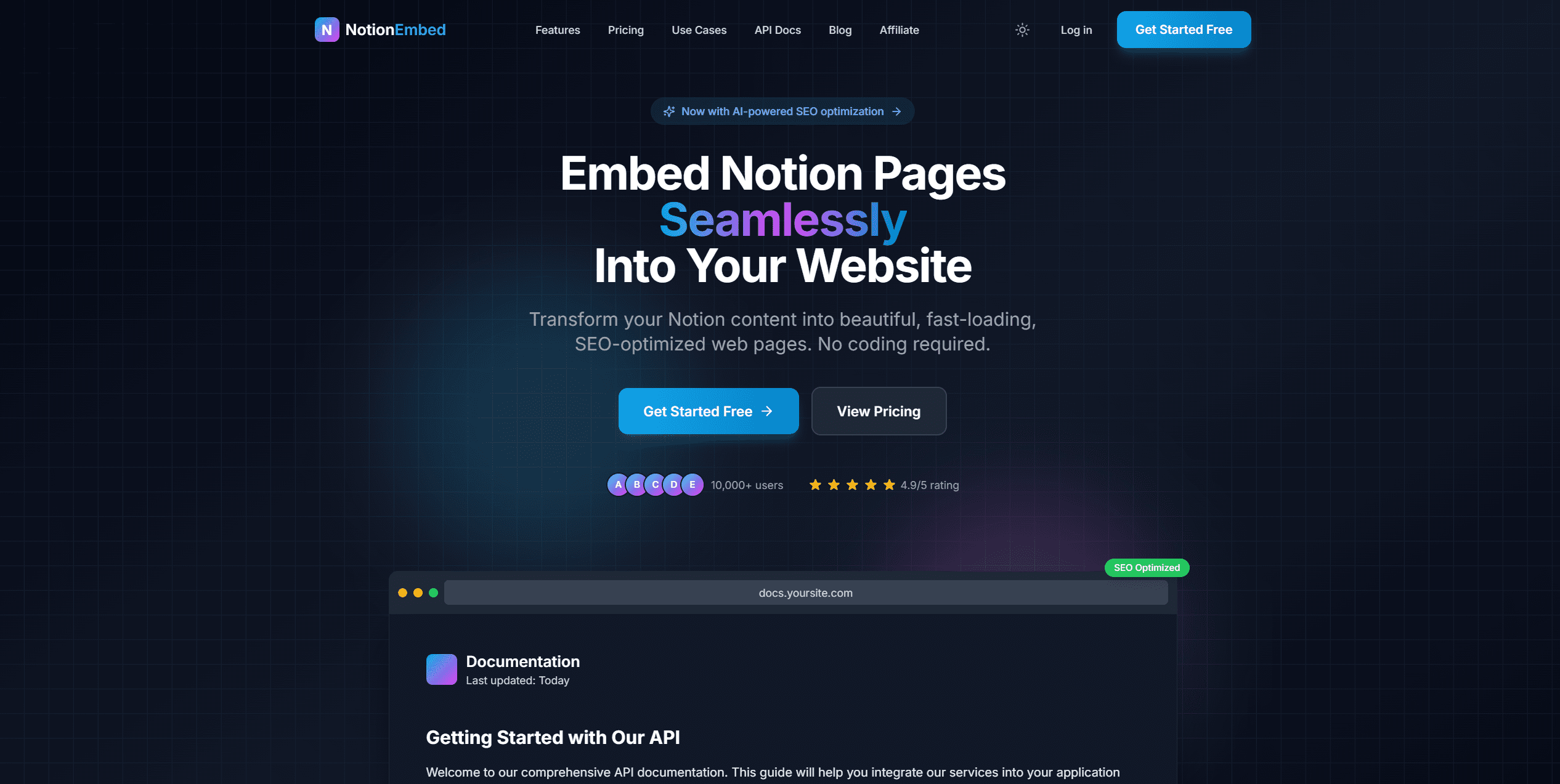
NotionEmbed is a powerful tool for enhancing SEO. It allows you to integrate Notion pages into your website seamlessly.
This integration can boost your site’s search engine ranking. It makes your content more accessible and engaging.
Embedding Notion pages can improve user interaction. It offers dynamic and interactive content that keeps visitors engaged.
Properly optimized NotionEmbeds can enhance SEO performance. They increase dwell time and reduce bounce rates.
Descriptive titles and headings in Notion pages are essential. They improve search engine indexing and visibility.
Mobile optimization is crucial for SEO. Ensure your Notion pages are mobile-friendly for better performance.
Internal linking within Notion pages enhances navigation. It also boosts SEO by creating a cohesive content structure.
Optimizing images and media in Notion pages is vital. It ensures faster loading times and better SEO results.
Regularly updating Notion content keeps it fresh. This practice positively impacts your site’s SEO.
In this guide, we’ll explore how to maximize SEO with NotionEmbed. Let’s dive into actionable tips and strategies.
Understanding NotionEmbed and Its SEO Potential
NotionEmbed is a unique feature from Notion. It lets you incorporate Notion pages directly into your website. This seamless integration can transform your site’s SEO.
Embedding is more than just convenience. It offers an interactive experience for your users. Engaged users often stay longer on your site, which improves your SEO metrics.
Search engines reward sites with high user engagement. Dwell time and reduced bounce rates can boost your ranking. NotionEmbed can help you achieve these favorable outcomes.
To unlock NotionEmbed’s potential, understanding its features is key. It supports dynamic content integration. This feature is crucial for those seeking a modern content approach.
Key Features of NotionEmbed:
- Integration of live Notion pages
- Real-time content updates
- Compatibility with multiple platforms
- Enhanced user engagement
Notion’s flexibility is another strong point. It adapts to various website styles and structures. This ensures a consistent look across all your digital platforms.
SEO is not static; it evolves. NotionEmbed aligns with emerging SEO trends, like interactivity and dynamic content. Staying updated with these trends is crucial to maintaining a competitive edge.
Embedding Notion pages isn’t just about aesthetics. It’s also about the quality and freshness of your content. Regular updates ensure that search engines notice you, enhancing visibility.
By leveraging NotionEmbed, you can streamline your SEO strategy. Integrating it into your content strategy can drive significant traffic improvements.
Understanding how NotionEmbed works lays the foundation for effective usage. As we explore further, you’ll learn to optimize this tool for maximum SEO impact.
Why Embed Notion Pages Into Your Website?
Embedding Notion pages into your website offers several benefits. First, it enhances the user experience with interactive content. Visitors engage more when content is dynamic and up-to-date.
Notion pages allow for centralized content management. This streamlines updates and keeps information consistent. A single update in Notion reflects immediately on your site.
Easily accessible content is key for retaining visitors. When users find updated and relevant information quickly, they are likely to return. This increases visitor loyalty and improves SEO metrics.
Here’s why you should consider embedding Notion pages:
- Central Management: Update content in one place.
- Dynamic User Experience: Engage users with real-time data.
- SEO Benefits: Improved dwell time and reduced bounce rates.
- Consistency: Uniform content across digital platforms.
Embedding is also about efficiency. Notion’s intuitive interface allows non-developers to manage website content. This democratizes content control and speeds up changes.
Visitors staying longer on your site signals quality. Search engines take notice, improving your site’s rankings. The interactive nature of Notion pages can help achieve this.
Incorporating Notion into your site isn’t just a feature; it’s a strategy. It exemplifies forward-thinking digital engagement, positioning your site ahead of competitors.

Finally, technology evolves, and so should your site. Notion pages offer a versatile integration option. They future-proof your site, keeping it relevant in a digital-first world.
Embedding Notion pages is a strategic move. As you take steps towards integration, keep both user experience and SEO improvements in mind.
How NotionEmbed Impacts SEO: Key Benefits
NotionEmbed can significantly boost your website’s SEO. One of its primary advantages is improving page engagement. Notion pages are interactive, and this interactivity keeps users on the site longer.
Longer dwell time positively affects search engine rankings. When visitors stay longer, it indicates valuable content. Search engines reward this with higher rankings.
Another benefit is reducing bounce rates. Engaging and informative Notion content reduces bounce rates. Users find what they need quickly, which enhances site authority.
Enhancing indexing potential is crucial. Notion pages with well-defined headers and titles facilitate easier indexing. Search engines understand and rank such organized content better.
Consider the use of Notion’s collaborative features. They allow for regular updates and fresh content. Fresh content is more likely to be indexed favorably by search engines.
Key SEO improvements from using NotionEmbed:
- Increased Dwell Time: Interactive content retains users.
- Reduced Bounce Rates: Relevant information decreases bounces.
- Improved Indexing: Well-structured content aids searchability.
Embedding Notion pages also helps with internal linking. Well-crafted links enhance navigation and SEO. They guide users and search engines through your site effectively.
Moreover, Notion allows for multimedia integration. Optimized images and videos increase load speed. Quick-loading pages rank better because they enhance user experience.
Maintain quality with structured data. Notion’s database features help create structured, crawlable content. Such organization aids in better indexing and ranking.
Benefits of adding multimedia with Notion:
- Image and Video Optimization: Fast loads, better ranks.
- Structured Data: Streamlined and searchable content.
- Internal Linking: Effective user and search engine pathways.

Furthermore, backlinks to well-crafted Notion pages increase their credibility. Websites with authoritative links tend to perform better in search rankings.

Ultimately, NotionEmbed offers extensive SEO benefits. These include stronger engagement, enhanced indexing, and seamless content integration. Embrace these features to advance your website’s SEO strategies. By doing so, your site will not only meet but exceed modern digital marketing standards.
Setting Up NotionEmbed: Step-by-Step Guide
Setting up NotionEmbed is straightforward, yet powerful for SEO optimization. Start by selecting the Notion page you want to embed. Ensure it contains valuable and relevant content that appeals to your audience.
Next, make the page public. For SEO benefits, the page must be publicly accessible. This allows search engines to index the content effectively.
Log in to your Notion account and click ‘Share’ in the top-right corner. This action will guide you to a menu to manage visibility settings.
Once shared publicly, obtain the embed code. Click on ‘Copy link’ to get the Notion page URL. This URL is crucial for embedding the page on your website.

Head to your website’s backend. Access the HTML editor where the page will be embedded. Paste the Notion URL in the designated section of the website’s code.
To proceed, use an iframe tag to embed the Notion page. Craft the iframe as follows:
<iframe src=”YOUR_NOTION_PAGE_LINK” width=”100%” height=”500px”></iframe>
Tweak width and height parameters for different website elements. This flexibility ensures the Notion page fits seamlessly within your site.

Preview the changes before going live. Ensure the embedded Notion page loads properly and fits within your site’s design aesthetic.
Finish by publishing the changes on your website. Your Notion page is now live and integrated, enhancing your website’s dynamic content with real-time updates.
Consistently review the embedded content. Regular updates help maintain relevance and provide continual SEO benefits.
Key Setup Steps:
- Select and Share Page: Publicly accessible with ‘Share’ function.
- Copy Embed Code: Use the Notion URL.
- Embed Code with iframe: Customize dimensions.
With these steps, you’re well on your way to leveraging NotionEmbed for effective SEO optimization. The integration broadens your content horizons, attracting diverse visitors and improving site metrics.

Optimizing Notion Pages for SEO Before Embedding
Before embedding, optimize your Notion pages for maximum SEO impact. Start with a clean, logical structure that search engines can easily crawl and comprehend.
Leverage strategic titles and headings. Ensure each page features descriptive, keyword-rich titles. This practice enhances indexing and search visibility.
Utilize clear headers such as H1, H2, and H3 tags. These tags guide both users and search engines through your content, improving readability and structure.

Content freshness is key. Regularly update your Notion pages to ensure content remains relevant and valuable. Fresh content can boost your SEO performance significantly.
Incorporate internal links within the Notion page. Linking related content guides users further into your site, improving their experience and boosting SEO.
Lists add value to your Notion pages:
- Bullet points improve scannability.
- Numbered lists guide readers through sequences.
Ensure your Notion pages are mobile-friendly. Mobile optimization is essential, as many users access content via smartphones and tablets.
Optimize images and media in Notion. Large files slow down loading times, negatively affecting SEO. Compress and resize images accordingly.
Add descriptive alt text to all images. Alt text provides context for search engines and improves accessibility for users with visual impairments.
Consider using Notion’s database features. Structured data is easily crawled by search engines, enhancing your pages’ SEO potential.

Utilize metadata strategically. Metadata, such as descriptions and tags, offers additional SEO benefits by providing search engines with specific contextual cues.
Creating backlinks to your Notion pages increases their authority. Encourage other sites to link to your valuable content for broader reach and authority.
Notion’s collaboration features can enhance content quality. Gather insights and feedback to refine your pages before embedding them into your website.
When Notion pages are set to public, your optimization efforts can shine. Ensure pages intended for SEO are accessible to search engines.
Focus on quality content. Valuable, informative content that addresses user queries is crucial for good SEO performance.
Key Optimization Points:
- Headings and Titles: Use keywords strategically.
- Regular Updates: Keep content fresh and engaging.
- Internal Linking: Enhance navigability and SEO.
Optimize with these strategies to prepare your Notion pages for embedding. Well-optimized Notion pages contribute to a more dynamic, engaging, and SEO-friendly website.
Technical SEO Considerations for NotionEmbed
Technical SEO is essential for embedded Notion pages. These aspects enhance performance and accessibility.
Start by ensuring clean URL structures for embedded pages. A simple, understandable URL improves user experience and search indexing.

Page speed is another critical factor. A slow-loading page deters users and negatively impacts SEO performance.
To maintain speed, minimize the use of heavy scripts. Ensure your Notion embeds do not overload the page with excess code.
Make use of responsive design. Ensure your Notion pages fit varied screen sizes seamlessly, as device diversity increases.
Valid HTML is a technical necessity. Validate your Notion embeds’ HTML to prevent errors and ensure optimal rendering.
Consider the use of a Content Delivery Network (CDN). A CDN distributes page content across multiple servers, reducing load times.
Review your site’s robots.txt file. Make sure it does not block any embedded Notion pages you wish to be indexed by search engines.
Check your sitemap to include Notion embedded URLs. This helps search engines discover and index your content efficiently.
Here’s a checklist for technical considerations:
- URL Structures: Keep them clear and concise.
- Loading Speed: Optimize scripts and media.
- HTML Validation: Ensure no errors disrupt rendering.

Site security is vital. Use HTTPS to secure data exchanges. HTTPS is a search ranking factor and builds user trust.
Regular audits are crucial. Use tools like Google PageSpeed Insights to analyze Notion embeds. Adjust based on feedback for continuous improvement.
Leverage schema markup if applicable. Notion embeds with rich snippets allow search engines to understand content context better.
Focus on these technical elements to boost performance. Technical SEO supports other optimization efforts, promoting better search rankings.
Ensuring these considerations are met strengthens your site’s foundation. Successfully embedding Notion pages strengthens your site’s SEO and user experience.
Content Strategies: Making Embedded Notion Pages SEO-Friendly
Crafting content for embedded Notion pages requires strategic thinking. A well-structured page boosts SEO and user engagement.
Start by ensuring clarity and conciseness in your writing. Users appreciate straightforward information that’s easy to digest.

Break content into sections with clear headings. This enhances readability and helps search engines understand the page hierarchy.
Use keywords naturally within your content. Overstuffing keywords can be counterproductive, leading to penalties from search engines.
Internal linking is crucial. Link related Notion pages to keep users engaged longer and improve site navigation.
Leverage Notion’s database features to organize content effectively. Structured content is preferred by search engines for indexing.
Here’s a checklist to follow:
- Headings: Use relevant keywords naturally.
- Clarity: Maintain concise and easy-to-read content.

Create compelling meta descriptions for Notion pages. A well-crafted meta description attracts clicks and boosts SEO.
Incorporate visual elements, like images or infographics. They make content more appealing and break up text for easier consumption.
Always include descriptive alt text for images. Alt text improves accessibility and provides additional SEO value.
Regularly update Notion pages to keep content fresh. Frequent updates signal relevance and can improve your SEO rankings.
Balancing engaging content with technical precision creates a robust Notion page. This balance is key to attracting and retaining users.
Monitor analytics to refine your content strategy. Understanding user behavior on Notion pages can guide further optimizations.
By focusing on these strategies, embedded Notion pages can significantly enhance your site’s SEO performance.
Mobile Optimization for Embedded Notion Pages
Mobile optimization is a vital aspect of SEO. Many users browse the web on smartphones and tablets.
Ensure your embedded Notion pages are mobile-friendly. This can improve user experience and your search engine rankings.

Responsive design is key. It allows your pages to adapt to different screen sizes and orientations.
Check that all elements are easily accessible on mobile devices. This includes text, images, and interactive features.
Use bullet points for lists or key information. This format is easier to read on smaller screens.
Here’s a quick mobile optimization checklist:
- Responsive Layout: Adjusts seamlessly to all device types.
- User Accessibility: Clear and functional on mobile displays.
Optimize loading speed for mobile users. Slow pages can lead to higher bounce rates, negatively affecting SEO.
Test your mobile pages regularly. Use tools like Google’s Mobile-Friendly Test to ensure compatibility.
Consider touch navigation. Touch-friendly elements enhance user interactions on mobile devices.
Simplify navigation menus. Mobile users prefer simple, easily navigable interfaces.
Prioritize content. Ensure that vital information is placed prominently when viewed on mobile.
By focusing on mobile optimization, you ensure that your Notion embeds provide a top-notch experience for every user, helping maintain strong SEO performance.
Internal Linking and Navigation Best Practices
Internal linking is a powerful SEO strategy. It improves page views and user navigation.
Links guide visitors through your content, keeping them engaged. This helps reduce bounce rates.
When embedding Notion pages, consider how they fit into your site’s structure. Cohesive navigation can enhance user experience.

Use meaningful anchor text for links. This helps search engines understand content context.
Here’s a checklist of internal linking best practices:
- Relevance: Ensure links connect related content.
- Clear Text: Use descriptive link text for context.
- Variety: Vary your anchor text for natural results.
Link to your most important pages frequently. This signals to search engines that these pages are vital.
Avoid overloading pages with links. Too many can confuse users and dilute SEO.
Regularly audit your internal links. Ensure they are up-to-date and functioning correctly.
Think about the user’s journey. Provide links that add value and steer them deeper into your content.
Utilize Notion’s features to organize and interlink content seamlessly. This enhances both usability and visibility.
By incorporating strategic internal linking, your embedded Notion pages can significantly impact SEO. Thoughtful navigation not only keeps users engaged but also improves the overall authority of your site.
Image and Media Optimization in NotionEmbed
Images and media are crucial for engaging users with Notion embeds. They break text monotony and add visual interest.
However, media requires careful optimization. Slow-loading pages can harm SEO significantly.

Start by compressing images before uploading them. Smaller files load faster, enhancing user experience.
Here’s a quick list for optimizing images and media:
- Size Reduction: Use tools to compress without losing quality.
- Alt Text: Include descriptive alt text for accessibility.
- Formats: Use web-friendly formats like JPEG or PNG.
Alt text is vital not just for accessibility. It also helps search engines crawl your content.
Consider using lazy loading techniques. This delays loading images until needed, improving initial load times.
Finally, update media regularly. Fresh content can maintain user interest and boost SEO performance.
Incorporating these media optimization techniques into your NotionEmbed strategy can significantly impact user engagement and SEO. A streamlined load time paired with quality visuals can make your site stand out while keeping users returning for more.
Using Metadata and Structured Data with NotionEmbed
Metadata and structured data are like blueprints for search engines. They offer context, helping algorithms understand page content.
When using NotionEmbed, structuring metadata correctly enhances visibility. This can lead to a higher ranking in search results.

Start by crafting concise and descriptive titles for your Notion pages. These titles often appear as headlines in search results.
Meta descriptions are also essential. They provide a brief overview below the search result title, influencing click-through rates.
Here are steps to make your metadata effective:
- Title Tags: Keep them concise, relevant, and keyword-rich.
- Meta Descriptions: Summarize content while including important keywords.
- Structured Data: Implement schema markup to provide more detail.
Schema markup is a form of structured data that organizes information. It helps search engines index pages more effectively.
Use Notion’s database features to create well-structured content. This makes it easier for both users and search engines to navigate.
Remember, well-structured data can enhance your content’s appearance as rich snippets. These often appear more attractive to users, enhancing engagement.
In conclusion, using metadata and structured data with NotionEmbed can significantly improve search engine understanding and user interaction. By focusing on these SEO fundamentals, you enhance both your content’s reach and accessibility.
Monitoring and Analyzing SEO Performance of Embedded Notion Pages
Monitoring your SEO performance is crucial for continuous improvement. By analyzing results, you can refine strategies and enhance visibility.
Tools like Google Analytics and Search Console are essential. They help track traffic, user behavior, and keyword rankings.

Begin by setting up goals in analytics tools. Track metrics such as page views, bounce rate, and session duration for embedded Notion pages.
Regular review of these metrics provides insights into user engagement. A high bounce rate might indicate issues with content or layout.
Key areas to focus on include:
- Traffic Sources: Identify where visitors are coming from.
- User Behavior: Analyze interaction patterns on embedded pages.
- Keyword Performance: Evaluate which terms drive traffic.
Conversion tracking is another vital component. Understand how many users complete desired actions, such as filling forms or clicking links.
Periodically check technical aspects like page speed. Slow loading times can negatively impact user experience and SEO rankings.
Lastly, compare performance over time to spot trends. This can help identify what changes lead to improvements or declines in performance.
Monitoring tools can also send alerts for sudden drops or increases in traffic. Acting quickly on these alerts can prevent potential issues.
In summary, regularly analyzing the SEO performance of your embedded Notion pages is imperative. It provides actionable insights to continuously improve search visibility and user engagement.
Common Challenges and Solutions in NotionEmbed SEO Optimization
Implementing NotionEmbed for SEO can come with challenges. Understanding these issues is key to finding effective solutions.
One common challenge is maintaining website speed. Embedding complex Notion pages can slow down site performance.

To address this, opt for simplified Notion page designs. Prioritize loading essential content first to enhance user experience.
Another challenge is ensuring mobile responsiveness. Notion pages sometimes do not display well on smaller screens.
Make sure you design Notion pages with mobile users in mind. Use responsive layout features and test on various devices.
SEO visibility can be another hurdle. Notion’s privacy settings often prevent indexing by search engines.
Always set Notion pages to public if you want them indexed. Keep metadata accurate to help search engines understand the content.
List of common challenges and solutions:
- Slow Loading Speed: Simplify design, prioritize essential content.
- Mobile Compatibility: Ensure responsive design, test on devices.
- SEO Indexing: Set pages to public, use accurate metadata.
Additionally, navigation within embedded Notion pages can be problematic. Sometimes links within pages do not function as expected.
To fix this, test internal links thoroughly before making pages live. Regular updates ensure link functionality remains intact.
Lastly, keeping content fresh and relevant is crucial. Regular updates and monitoring keep Notion pages valuable for users and search engines.
By identifying and addressing these challenges, you can optimize your NotionEmbed usage for better SEO outcomes.
Case Studies: Successful NotionEmbed SEO Strategies
Successful use of NotionEmbed for SEO can be illustrated through various case studies. These real-world examples highlight the benefits of strategic embedding.
One notable example is an online retail store. They used NotionEmbed to display dynamic product catalogs. This approach not only enhanced user engagement but also improved their search rankings.

Another case is a digital marketing agency. They leveraged NotionEmbed to showcase client testimonials and case studies. This strategy boosted their SEO by increasing visitor dwell time and reducing bounce rates.
In both instances, careful attention was paid to mobile optimization. Ensuring responsive design on all devices contributed significantly to SEO success.
A tech blog used NotionEmbed for frequently updated content like tutorials. By embedding these within their website, they provided real-time updates and improved search visibility.

Moreover, they implemented structured data within Notion pages. This helped search engines better understand and index the content, enhancing SEO performance.
List of key success elements from case studies:
- Dynamic and Engaging Content: Improves user interaction.
- Mobile-Responsive Design: Ensures accessibility on all devices.
- Frequent Content Updates: Keeps information fresh and relevant.
- Structured Data Usage: Enhances search engine indexing.
Lastly, a non-profit organization used NotionEmbed to highlight campaign progress. They updated pages with new data and stories, keeping supporters informed and engaged.
These examples underline the versatility of NotionEmbed. By focusing on user engagement, mobile optimization, and regular updates, these organizations achieved notable SEO gains.
Such case studies offer valuable insights for anyone looking to optimize their website using NotionEmbed. They demonstrate the strategic advantages of embedding for enhancing visibility and user experience.
Advanced Tips: Integrations, Automation, and Future Trends
Integrating Notion with other tools can significantly enhance your SEO strategy. Automation can also streamline content management, reducing manual effort and increasing efficiency.
One key integration is with analytics tools. By connecting Notion to platforms like Google Analytics, you can track user engagement with embedded content. This data is invaluable for refining your SEO approach.

Automation tools such as Zapier can further extend the utility of NotionEmbed. You can automate content updates, ensuring your website always features the latest information.
Another advanced tip involves leveraging APIs. Using Notion’s API, developers can create custom solutions for content management and SEO optimization. This enables a bespoke approach, tailored to specific business needs.
Consider integrating Notion with social media platforms. This allows for seamless sharing of embedded content, increasing visibility and potentially boosting search rankings.
The use of chatbots and virtual assistants with NotionEmbeds is also on the rise. These technologies provide real-time user interaction, improving the user experience on your website.
List of advanced integration and automation tips:
- Analytics Integration: Gain insights into user engagement.
- Automation Tools: Reduce manual updates.
- API Utilization: Customize content solutions.
- Social Media Links: Enhance content visibility.
- Chatbot Integration: Improve user interaction.
Looking to the future, AI-powered tools will likely play a larger role. These tools can analyze vast data sets, offering real-time SEO suggestions and content improvements.
The landscape of SEO and digital marketing is always evolving. Embracing innovative tools and methodologies will ensure that your NotionEmbed strategy stays ahead of the curve.
By considering these advanced strategies, you can maximize the potential of NotionEmbed. This will help maintain strong SEO performance and adapt to upcoming trends in digital marketing.
Frequently Asked Questions About NotionEmbed SEO Optimization
Many website owners and marketers have questions about NotionEmbed SEO. Here, we address some of the most common queries.
What is NotionEmbed?
NotionEmbed allows you to integrate Notion pages directly into your website. This enhances content accessibility and dynamic content delivery.
How does embedding Notion pages affect SEO?
Embedding Notion pages can boost SEO by increasing engagement and interaction. It can also help improve metrics like dwell time and reduce bounce rates.
Can search engines index Notion pages?
Yes, but only if your pages are set to public. This ensures they are accessible and indexable by search engines.
Are embedded Notion pages mobile-friendly?
They can be, provided the original Notion page design is responsive. Mobile optimization is crucial for SEO success.
What are some quick tips for optimizing Notion pages for SEO?
- Public Access: Ensure pages are set to public.
- Mobile-Friendly: Design for responsiveness.
- Descriptive Titles: Use clear and relevant titles.
- Internal Links: Enhance site navigation.
- Regular Updates: Keep content fresh and relevant.
By addressing these FAQs, we hope to clarify the benefits and strategies for optimizing your SEO with NotionEmbed. For more detailed guidance, explore further resources and case studies.
Conclusion: Maximizing SEO with NotionEmbed
Harnessing the power of NotionEmbed can significantly boost your website’s SEO performance. It allows for seamless integration of dynamic, interactive content directly onto your site. This can vastly enhance user engagement and experience.
Investing time in optimizing Notion pages before embedding them is key. Small adjustments like making your pages public and using clear headings can improve search engine visibility. These tweaks ensure your content is accessible and easily indexable.
Don’t overlook the technical elements. Page load speed and mobile responsiveness are crucial for maintaining high SEO standards. Pay attention to how your Notion embeds affect website performance. Fast, smooth user experiences can decrease bounce rates, improving overall SEO metrics.
Embrace the potential of internal linking and a solid content strategy. Well-structured content and intuitive navigation within embedded Notion pages help retain users. This encourages them to explore more, positively impacting dwell time.
By applying these strategies, you position your website for success. Remember that continuous monitoring and analysis are essential. NotionEmbed is a valuable tool in your digital marketing arsenal when used effectively.
